Support
March 4, 2026
Identity Beyond the Record: Reclaiming Your Narrative
We work with women who have been defined by their worst moments, labeled by their past mistakes, and reduced to a checkbox on a form.
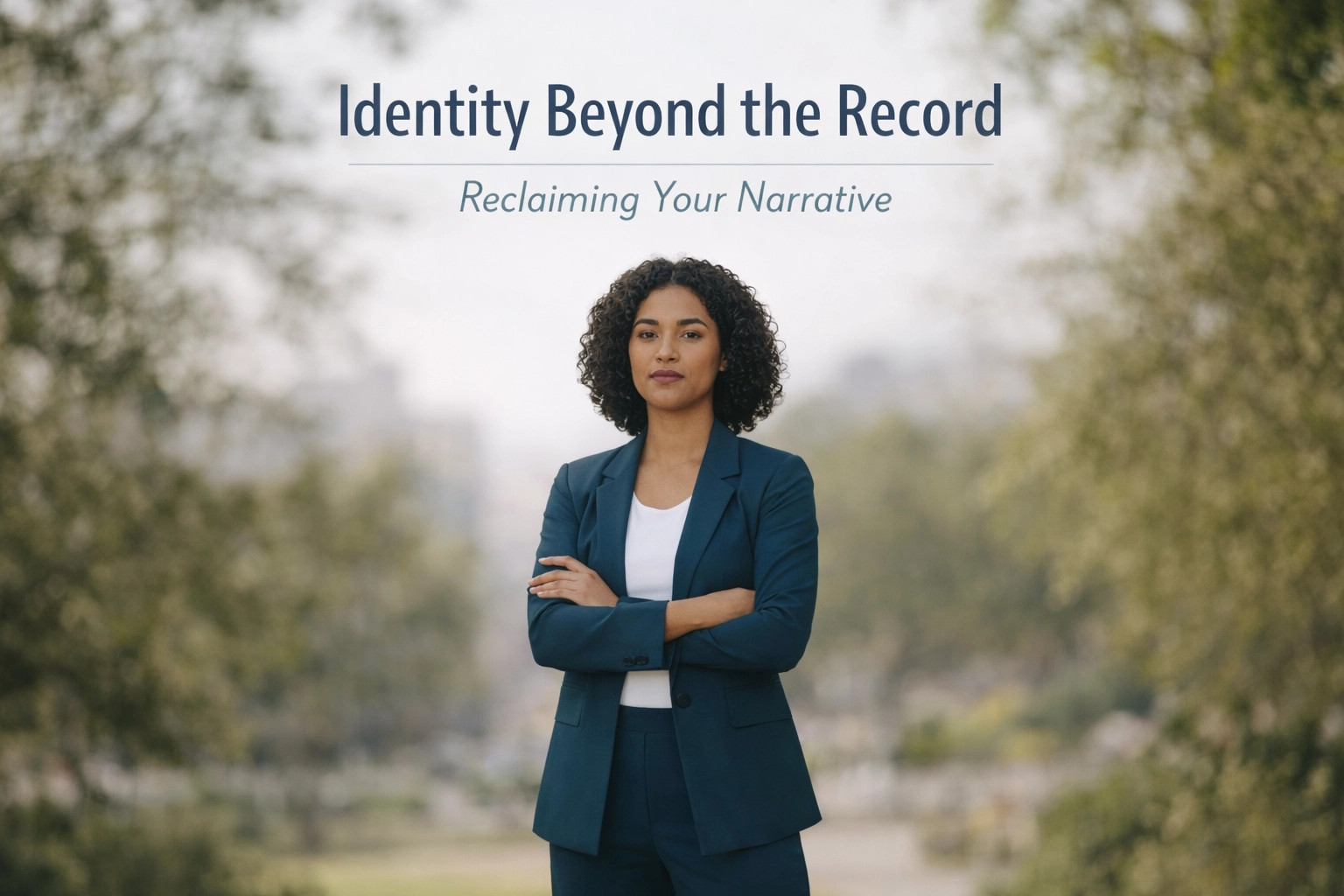
We work with women who have been defined by their worst moments, labeled by their past mistakes, and reduced to a checkbox on a form. You are not your record. You are not your sentence. You are not the sum of decisions made in survival mode, in desperation, or in circumstances you can barely recognize anymore.
You are a whole, complex, evolving human being whose story extends far beyond a criminal record, a court date, or a legal label that follows you like a shadow.
When Your Identity Becomes a Label
There's a particular kind of grief that comes with being reduced to a record. It's the grief of losing your name to a number. The grief of watching people's faces change when they learn about your past. The grief of filling out application after application, knowing that one checkbox will eliminate you before anyone reads another word about who you actually are.
You didn't just lose time. You lost the right to define yourself.
In a world obsessed with documentation, verification, and background checks, your identity has been hijacked by institutional systems that see you as data, not human. Your Social Security number, your case number, your conviction date: these have become the primary markers of who you are in official spaces. But identity extends far beyond official documents.

Your record tells one story. Your life tells another. And the most revolutionary act you can commit is reclaiming the right to tell your own story.
Did You Know?
Did you know that nearly 70 million Americans have some type of criminal record: that's roughly 1 in 3 adults? Did you know that women are the fastest-growing segment of the incarcerated population, and that the majority were primary caregivers before their involvement in the system? Did you know that the collateral consequences of a conviction can include restrictions on housing, employment, education, professional licensing, public benefits, and even parental rights?
Your record doesn't just document your past: it dictates your future. Until you decide it doesn't.
The Invisible 90% of Who You Are
Here's what your record doesn't show: Your resilience. Your capacity for growth. The way you showed up for your children even when the world told you that you couldn't. The skills you developed. The dreams you still carry. The person you were becoming before everything fell apart. The person you're becoming now.
Your record is not comprehensive: it's selective. It captures a fraction of a moment in time and treats it as if it's the entirety of who you are. It's like judging an entire book by one paragraph on one page, yet society has given that paragraph the power to define your entire narrative.
This is the invisible 90% of your identity: the parts that don't show up on background checks but make up the fullness of who you are.
The mother who reads bedtime stories with voices that make her children laugh. The friend who shows up when called. The woman who has learned hard lessons and grown wiser because of them. The survivor who kept breathing through circumstances that would have broken others. The dreamer who still believes in second chances even when the world says you don't deserve one.

The Grief Behind the Label
There is profound grief in being misrecognized. In being seen only through the lens of your worst day. In having your identity stolen by a system that reduces complexity to categories and transforms human beings into risk assessments.
This is the grief I see in the women I work with: the grief of being known but not seen, documented but not understood, judged but not heard. It's a grief that lives in the space between who you know yourself to be and who the world tells you that you are.
You are grieving the loss of your narrative authority. The power to introduce yourself on your own terms. The freedom to be seen as multidimensional. The possibility of being defined by your present and your potential instead of being haunted by your past.
This grief is real. This grief is valid. And acknowledging this grief is the first step toward reclaiming your identity.
Reclaiming Your Narrative: A Revolutionary Act
Let me be clear: You do not need permission to redefine yourself. You do not need a pardon, a certificate, or institutional validation to know that you are more than what happened to you or what you did in a moment of your life.
Reclaiming your narrative means recognizing that digital identity is more comprehensive than legal identity alone. You are the stories you tell yourself. The values you live by. The relationships you nurture. The work you do: paid or unpaid. The communities you belong to. The ways you show up in the world every single day.
Your identity is not static: it's dynamic. You are constantly becoming. And the narrative that matters most is not the one written by prosecutors or judges or HR departments. It's the one you write through your choices, your growth, and your commitment to living beyond the limitations others have placed on you.

Practical Steps Toward Identity Reclamation
Start by naming what you've lost. You cannot reclaim what you don't acknowledge. Write down the parts of your identity that feel stolen or erased. Give voice to the grief of being reduced to a label.
Then name who you actually are. Not who you were. Not who you wish you were. Who you are right now, in all your complexity. Write it down. Say it out loud. Practice introducing yourself in ways that center your wholeness rather than your record.
Surround yourself with people who see you fully. Seek out communities, support systems, and relationships with people who recognize your humanity before they see your history. Distance yourself from spaces and people who insist on defining you by your past.
Document your own story. Keep a journal. Start a blog. Record voice memos. Create art. Build a portfolio of who you're becoming. You are the primary author of your narrative: act like it.
Pursue growth that aligns with your values, not just employment. Take classes that interest you. Develop skills that excite you. Volunteer in spaces that matter to you. Build a life that reflects your values, and let that life speak louder than your record ever could.
My Vision: Freedom to Become
I believe in a world where women are not defined by their records but celebrated for their resilience. Where mistakes are seen as chapters in a story, not the entire plot. Where identity is recognized as multidimensional, evolving, and owned by the individual: not determined by institutions.
ALL women deserve the freedom to become who they are meant to be, unburdened by labels that no longer fit and unshackled from systems that profit from reducing people to their worst moments.
You deserve to be seen. Heard. Known beyond your record. And through Grief Behind the Gavel and other supportive spaces, I'm committed to helping women navigate the grief of being labeled while reclaiming the power to define themselves.

Your Record Is Not Your Identity
Let me leave you with this: Your past is part of your story, but it is not the conclusion. You are still writing. You are still becoming. And no record, no label, no checkbox on a form has the authority to tell you who you are or who you can be.
Identity beyond the record is not just possible: it's your right. And reclaiming your narrative is not an act of defiance against the truth. It's an insistence on the whole truth: the 100% of who you are, not just the fraction that's been documented and weaponized against you.
You are more. You have always been more. And it's time the world sees what you already know.
If you're ready to reclaim your narrative and heal from the grief of being labeled, I'm here. Let's work together to help you rediscover who you are beyond your record and build a life that reflects your wholeness.
About the author
Ayana Thomas, Grief Practitioner AKA The Grief Coach, brings over 20 years of experience at the intersection of human services, grief support, and justice-impacted systems. As the founder of Grieving Back to Life, Ayana’s work centers grief beyond death, addressing loss tied to trauma, incarceration, identity, and life disruption through trauma-informed, dignity-centered care.
Her approach combines lived experience and professional practice, creating spaces where grief is witnessed, not fixed, and healing unfolds at a human pace.
Gentle next step
If you’re considering reaching out, you’re welcome to contact us when you’re ready.