Awareness
February 26, 2026
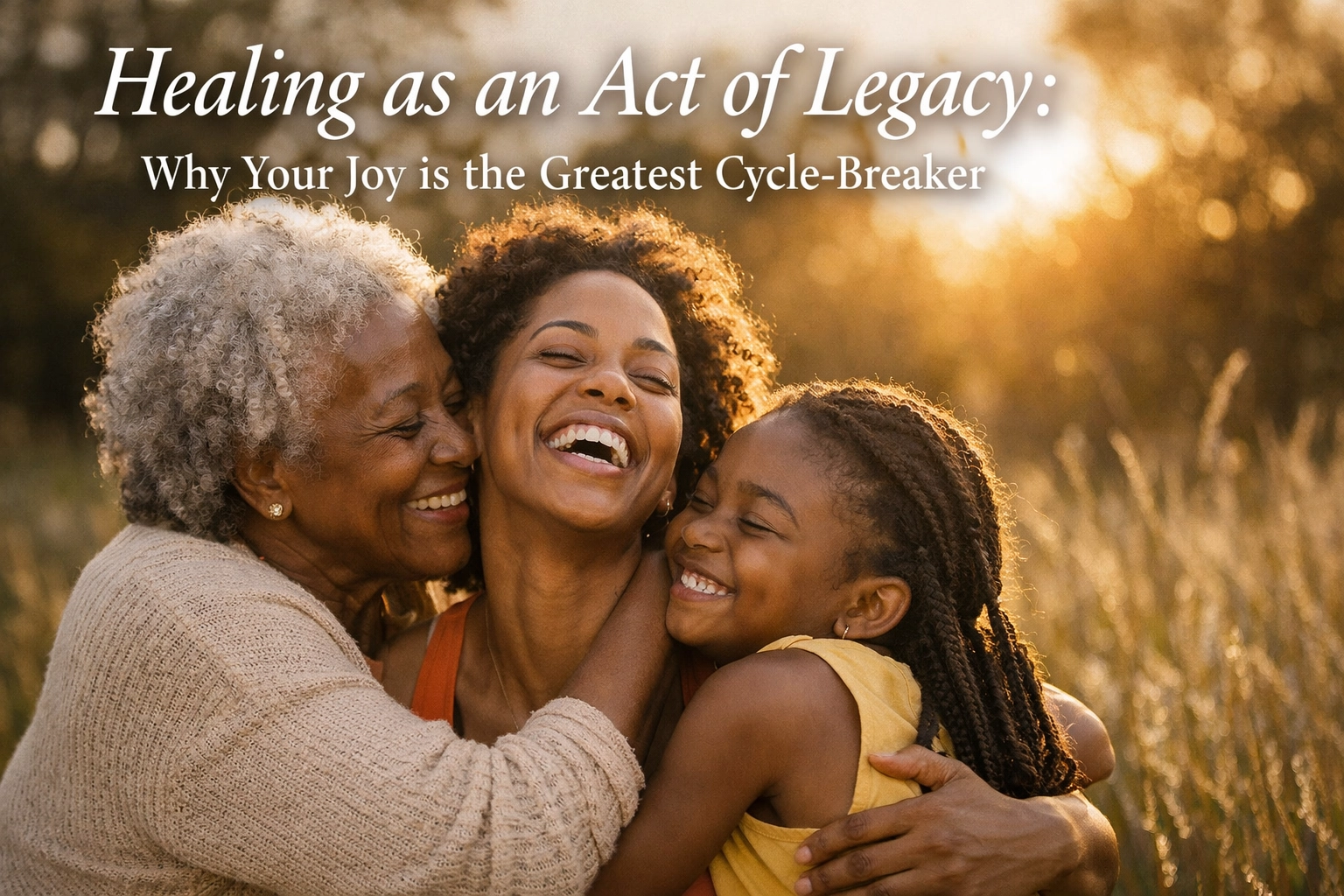
Healing as an Act of Legacy: Why Your Joy is the Greatest Cycle-Breaker
And here's what we know: Your healing isn't just about you.
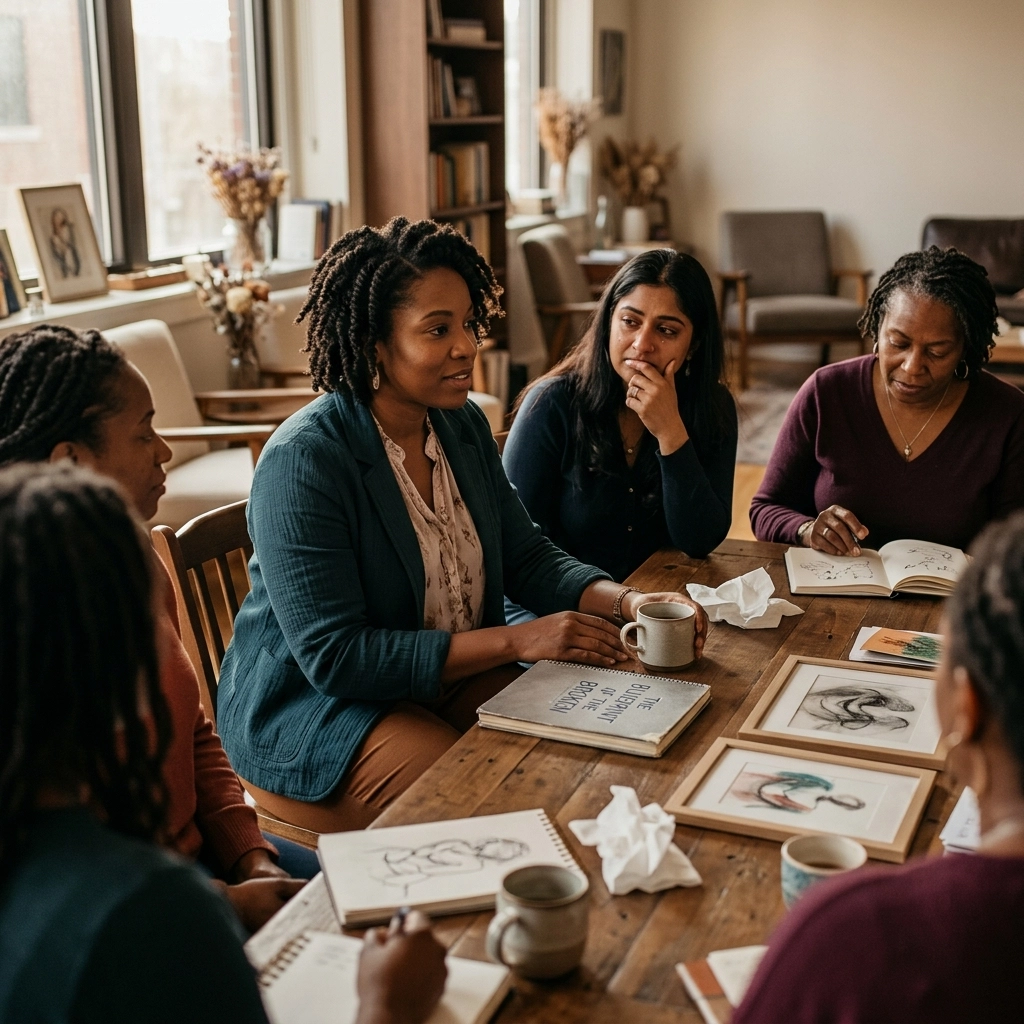
We work with women who've lived through trauma, survived systems that weren't built to hold them, and carried burdens that weren't theirs to carry in the first place.
And here's what we know: Your healing isn't just about you.
When you choose to do the deep work: when you pause, breathe, and say, "I deserve to feel joy again": you're not just changing your story. You're rewriting the script for everyone who comes after you. Your children. Your grandchildren. Your community. Your lineage.
This is what we call legacy work. And it starts the moment you decide that your joy matters.
The Weight We Didn't Ask For
For too many of us, survival became the curriculum. We learned how to endure before we learned how to thrive. We mastered silence before we found our voices. We carried grief like a second skin: grief for what happened, grief for who we had to become, grief for the lives we never got to live.

And if we're being honest? Most of us weren't just surviving our own pain. We were also carrying the unprocessed trauma of the generations before us. The mothers who had to be too strong. The grandmothers who couldn't afford to fall apart. The aunties who swallowed their stories so we wouldn't have to know.
That weight is real. And it's heavy. But here's the truth that changes everything: the cycles we choose to break today create new possibilities for those who come after us.
You are allowed to set it down.
Did You Know?
Research shows that healing a mother's trauma significantly reduces the risk of intergenerational involvement with the legal system. When we address our wounds: when we do the work to understand our grief, process our losses, and reclaim our stories: we don't just heal ourselves. We interrupt the pipeline. We stop the cycle. We change the odds for our children.
This isn't just therapy talk. This is data. This is evidence. This is legacy in action.
When You Heal, the Ripple Begins
There's a phrase we love: "When you heal, you lift up everyone around you." It's not hyperbole. It's the truth.
Think about it. When you prioritize your own well-being: when you stop apologizing for needing rest, support, or joy: you give permission to everyone watching you. Your daughter sees that it's okay to ask for help. Your sister sees that thriving isn't selfish. Your community sees that well-being is the norm, not the exception.

Your joy becomes contagious. Not in a shallow, "good vibes only" kind of way. But in a deep, transformative, "I watched her choose herself and it made me believe I could too" kind of way.
That's the ripple. That's the cascade. That's how one woman's healing becomes a family's freedom. A neighborhood's hope. A generation's revolution.
What Legacy Really Means
We talk a lot about legacy in abstract terms: like it's something you leave behind when you're gone. But we believe legacy is something you build while you're here.
Legacy is the way your laughter sounds in your home. It's the way your children see you honor your own needs without guilt. It's the traditions you create that center rest, not just resilience. It's the conversations you have that name trauma instead of hiding it. It's the joy you claim even when the world told you that you didn't deserve it.
When you do the work to heal: really heal, not just survive: you teach the next generation that they don't have to carry what broke you. You show them a different way.
And that? That is the most powerful gift you could ever give.
The Grieving Back to Life Edition: A Movement, Not Just a Program
This is why we created the Grieving Back to Life Edition. Because we knew that healing couldn't just be about managing symptoms or "moving on." It had to be about something bigger. Something generational. Something that honored the profound work it takes to grieve the life you lost and build the life you deserve.

This program is legacy work. It's designed for women who are ready to do more than survive. Women who are ready to:
- Name the losses they've carried in silence
- Understand how trauma shaped their survival strategies
- Reclaim joy without guilt or apology
- Model a new way for their families and communities
- Break cycles that have existed for generations
We built this program because we know what it's like to be told to "get over it" when the pain is still living in your body. We know what it's like to smile on the outside while grieving on the inside. We know what it's like to wonder if healing is even possible when the world keeps reminding you of everything you've lost.
And we're here to tell you: It is possible. And you don't have to do it alone.
Joy is Not a Betrayal
One of the hardest things we see women struggle with is the belief that joy is somehow a betrayal. "How can I be happy when I've lost so much? How can I laugh when my children are hurting? How can I rest when there's so much work to do?"
We get it. We really do. But here's what we need you to hear: Your joy is not a betrayal. Your joy is an act of resistance.
When you choose to feel pleasure, connection, and peace: even in the midst of ongoing struggle: you are proving that the systems that tried to break you didn't win. You are showing that you are more than your trauma. You are demonstrating that healing is not only possible, but necessary.
And your children? They're watching. They're learning. They're seeing that it's possible to hold grief and joy at the same time. They're learning that surviving isn't the same as living. They're learning that their mother's happiness matters.
That lesson? That's the cycle-breaker.
What Healing Looks Like in Practice
Healing doesn't mean you wake up one day and everything is fixed. It's not linear. It's not pretty. And it's definitely not quick.
Healing is messy. It's crying in the car before you pick up your kids. It's setting a boundary with family for the first time in your life. It's going to therapy even when you're tired. It's letting yourself feel angry about what happened instead of just sad. It's saying "I'm not okay" out loud and trusting that someone will hold space for you.

But healing is also this: It's the moment you laugh without feeling guilty. It's the day you realize you went a whole hour without thinking about the past. It's the morning you wake up and feel something other than dread. It's the conversation where you tell your daughter, "I'm working on myself, and it's okay for you to work on yourself too."
These moments? These are the bricks. And you're building a new foundation.
The Invitation
We're not here to tell you that healing is easy. We're here to tell you that it's worth it. Not just for you, but for every person whose life will change because you chose to heal.
You are the cycle-breaker. You are the one who said, "Not on my watch. Not with my children. Not in my lineage." You are the one who decided that joy, peace, and thriving were not just dreams: they were rights.
And we see you. We honor you. We are here to walk with you.
If you're ready to begin this work: if you're ready to reclaim your story, process your grief, and build a legacy of healing: we invite you to explore the Grieving Back to Life Edition. This is more than a program. This is a movement. And it starts with you.
About the author
Ayana Thomas, Grief Practitioner AKA The Grief Coach, brings over 20 years of experience at the intersection of human services, grief support, and justice-impacted systems. As the founder of Grieving Back to Life, Ayana’s work centers grief beyond death, addressing loss tied to trauma, incarceration, identity, and life disruption through trauma-informed, dignity-centered care.
Her approach combines lived experience and professional practice, creating spaces where grief is witnessed, not fixed, and healing unfolds at a human pace.
Gentle next step
If you’re considering reaching out, you’re welcome to contact us when you’re ready.