Suport
February 25, 2026
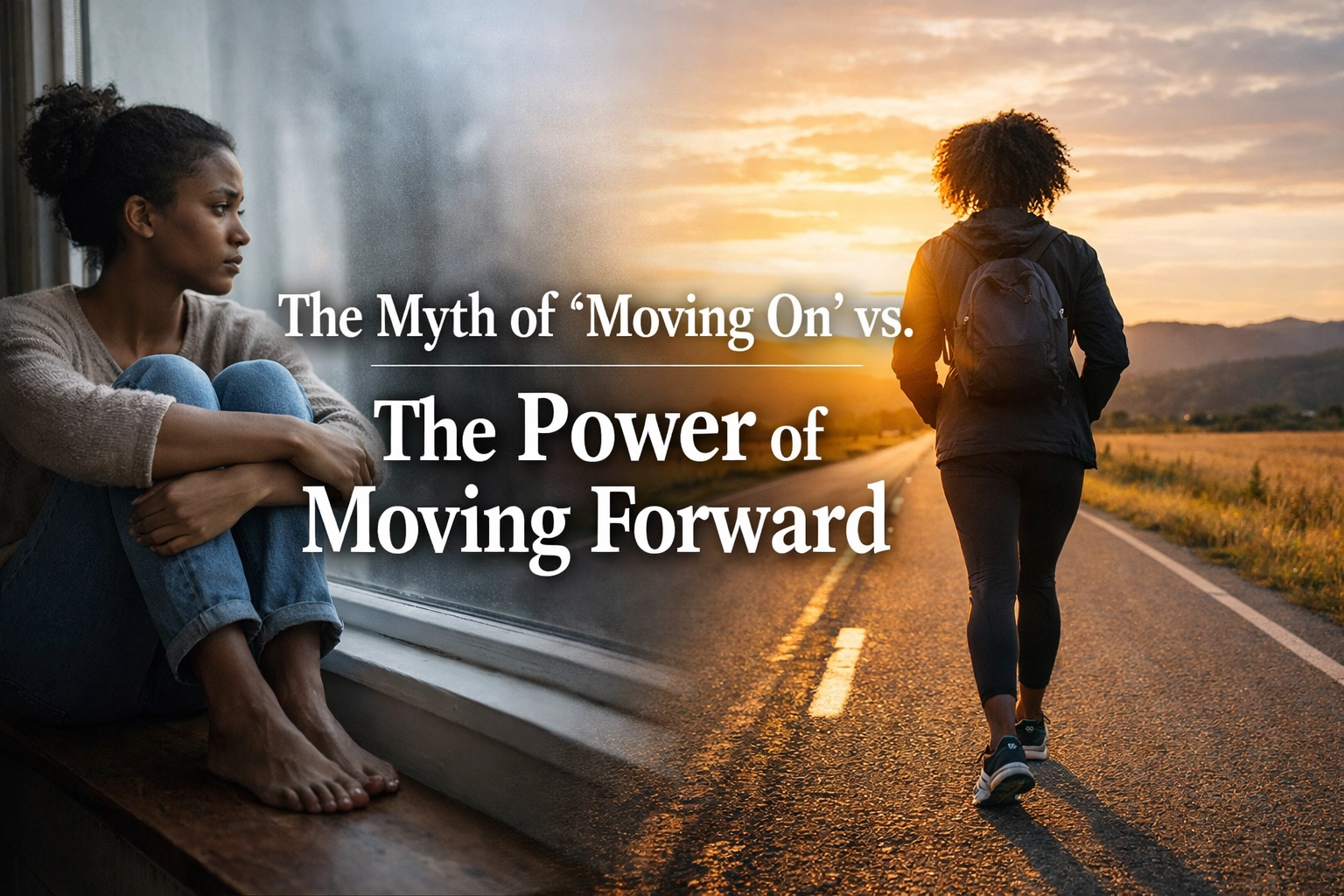
The Myth of 'Moving On' vs. The Power of Moving Forward
We work with women who have been told: over and over again: to "just move on."
We work with women who have been told: over and over again: to "just move on."
Move on from the trauma. Move on from the incarceration. Move on from the loss of their children, their freedom, their sense of self. Move on from the woman they had to become just to survive. And when they can't do it fast enough, when the grief still shows up in their bodies, in their triggers, in their sleepless nights: they're told they're stuck. That they're not trying hard enough. That healing should look like forgetting.
But we know the truth: "moving on" is a myth that leaves women drowning in shame. "Moving forward" is the path that sets them free.
The Lie We've Been Sold
Society has sold us a dangerous story about grief. It tells us that healing has an expiration date. That closure is a destination you reach if you just work hard enough, think positive enough, let go enough. The message is clear: erase the pain, erase the past, and erase the version of yourself that lived through it.
This is what "moving on" demands. It requires you to treat your trauma like a stain you can scrub away. It pressures you to leave your grief behind as if it were baggage you chose to carry instead of weight the world placed on your back. It tells you to get over it: as though grief were a hurdle instead of a curriculum.
Did you know?
Most people expect grief to subside within six months. But research shows that for women who have experienced deep trauma: especially trauma compounded by systemic violence, incarceration, or loss: the real processing often only begins after the first year. The timeline we've been given is a fiction designed to make others comfortable, not to support our actual healing.

And here's what happens when we try to follow that fiction: we suppress. We perform. We smile through the storm because the world rewards women who don't take up too much emotional space. We push down the rage, the sorrow, the knowing that something was taken from us that we can never get back. We force ourselves to act like we've "moved on" while our bodies keep the score.
The cost of this lie? Emotional numbness. Anxiety. Self-doubt. Depression. Re-traumatization. The pain doesn't disappear: it just goes underground, only to resurface later in ways that feel uncontrollable and isolating.
The Truth About Moving Forward
Moving forward is not about pretending the past didn't happen. It's about integrating what happened into who you are becoming: not as a wound that defines you, but as a chapter that deepened you.
When we move forward, we don't erase our grief. We carry it differently. We stop trying to outrun it and instead learn to walk alongside it. We acknowledge that the woman who survived what we survived deserves to be honored, not abandoned. We recognize that healing isn't about forgetting: it's about remembering with less pain and more power.
This is what integration looks like:
- You can grieve what you lost and still build a future.
- You can carry anger about injustice and still cultivate joy.
- You can honor the past and still take new steps forward.
- You can feel the weight of your experiences without being crushed by them.
Moving forward means you give yourself permission to heal at your own pace. Not in six months. Not on anyone else's timeline. You move in waves: some days forward, some days backward, and many days in circles. And that's not failure. That's the rhythm of real healing.

The Wisdom We Don't Want to Lose
Here's something they don't tell you about "moving on": when you try to leave your experiences behind, you also leave behind the lessons embedded in them. You lose the hard-won wisdom. The insight into your triggers. The recognition of red flags. The deeper understanding of what your body needs to feel safe.
When we move forward instead, we extract those lessons. We mine the grief for its gifts: not because we're grateful for the trauma, but because we refuse to let our pain be meaningless. We take what we've learned about resilience, survival, boundaries, and strength, and we bring it with us into the next chapter.
We also retain connection to the women we were before the loss, before the system, before the survival. Moving forward doesn't mean cutting ourselves off from our past selves: it means bringing all versions of us along for the journey.
AYANA's Grief Method™: Carrying Grief Without Being Crushed
At Ayana Thomas Initiative LLC, we don't teach women to "move on" from their grief. We teach them to move forward with it: to carry it without being consumed by it. This is the foundation of AYANA's Grief Method™.
Our method is built on a simple but revolutionary truth: grief is not a problem to solve. It's a companion to learn from.
Here's how we do it:
1. Acknowledge the Full Story
We start by naming what was lost: not just the obvious losses like people or freedom, but the invisible ones too. The dreams deferred. The trust broken. The version of yourself you had to leave behind to survive. We create space to grieve all of it without judgment or timelines.
2. Integrate, Don't Isolate
We help you weave your grief into your story instead of treating it like a secret you have to hide. Through trauma-informed counseling, peer support, and community healing spaces, you learn that your grief doesn't make you broken: it makes you human. And you are not alone in it.
3. Build New Capacity
Grief changes us. It rewires our nervous systems, reshapes our relationships, and redefines what safety means. AYANA's Grief Method™ doesn't try to "fix" you back to who you were before. Instead, we help you build new skills, new boundaries, and new ways of being that honor who you are now.
4. Reclaim Your Power
We believe healing is an act of justice. When the system has tried to silence you, shame you, or erase you, choosing to heal is an act of resistance. We help you transform your pain into purpose: not because you have to, but because your joy and your freedom are your birthright.

When "Moving On" Becomes Dangerous
There's one important caveat we need to name: in situations of ongoing abuse or toxic relationships, "moving on" through establishing hard boundaries or cutting ties may be necessary for survival. Leaving a dangerous situation is not the same as suppressing your feelings about it.
But even then, true healing requires moving forward afterward. It requires processing what happened so that the past doesn't dictate your future. It requires learning to recognize the patterns, trust your instincts, and rebuild your sense of safety from the inside out.
You can leave a situation and still need to heal from it. In fact, that's usually when the real grief work begins: when you're finally safe enough to feel.
The Permission You've Been Waiting For
If you're reading this and feeling the weight of years of trying to "move on" and failing, we want you to hear this clearly:
You didn't fail. The system failed you. The timeline failed you. The lie failed you.
You were never supposed to forget. You were never supposed to erase. You were never supposed to shrink your grief down to make other people comfortable.
You were supposed to feel it. To honor it. To carry it with you as you build a life that is both honest about your past and bold about your future.
That's not weakness. That's not "being stuck." That's moving forward.
Our Invitation
At Ayana Thomas Initiative LLC, we specialize in grief that doesn't fit into neat boxes. Grief that comes from trauma, incarceration, systemic violence, and survival. Grief that society doesn't want to talk about but that you carry every single day.
We see you. We believe you. And we're here to walk with you: not to rush you through your grief, but to help you carry it differently.
Whether through individual counseling, our Grief Behind the Gavel program for women impacted by incarceration, or our community workshops, we offer trauma-informed, culturally responsive support that honors all of who you are.
You don't have to move on. You just have to move forward: one honest, integrated, powerful step at a time.
About the author
Ayana Thomas, Grief Practitioner and The Grief Coach, brings over 18 years of experience at the intersection of human services, grief support, and justice-impacted systems. As the founder of Grieving Back to Life, Ayana’s work centers grief beyond death, addressing loss tied to trauma, incarceration, identity, and life disruption through trauma-informed, dignity-centered care.
Her approach combines lived experience and professional practice, creating spaces where grief is witnessed, not fixed, and healing unfolds at a human pace.
Gentle next step
If this article helped you name something you’ve been carrying, you’re welcome to reach out when you’re ready.