Education
February 17, 2026
The Grief-to-Prison Pipeline: Why We Misread Pain for 'Defiance'
Women whose pain was interpreted as a threat, whose grief was mistaken for defiance, and whose survival mechanisms were criminalized.

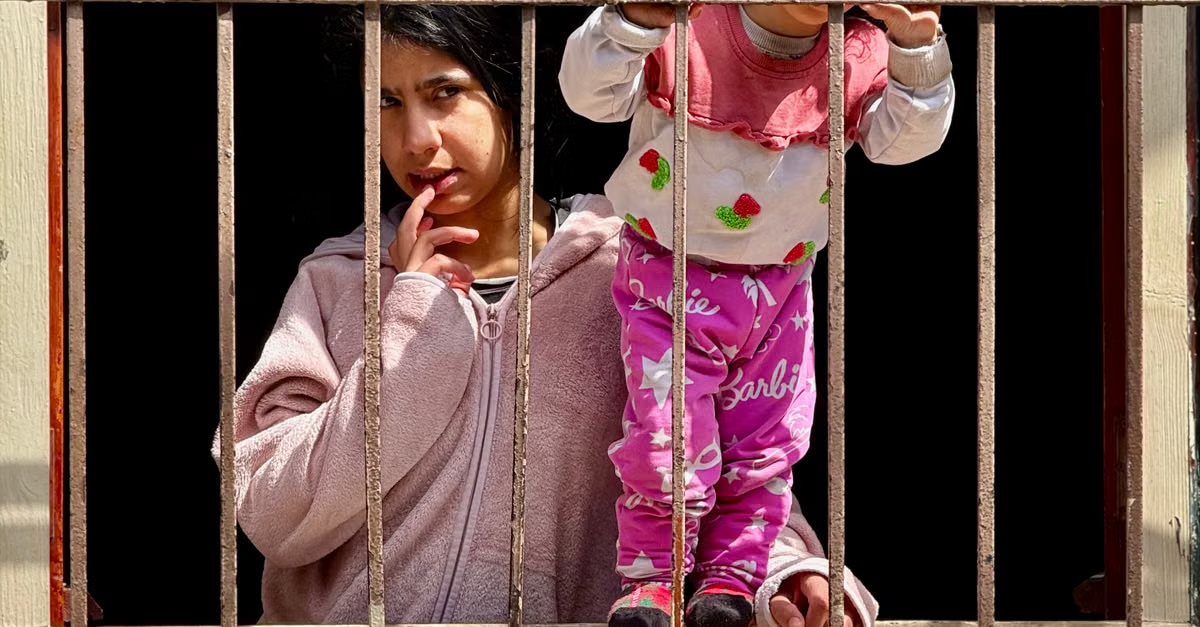
We work with women who have been called "difficult," "aggressive," "non-compliant," and "resistant to authority." Women who have been punished for crying too much, or not crying at all. Women whose pain was interpreted as a threat, whose grief was mistaken for defiance, and whose survival mechanisms were criminalized.
The truth? They weren't defiant. They were grieving.
And the system didn't know the difference.
When the System Misreads Your Nervous System as a Criminal Record
Here's what we know from decades of working inside and alongside the criminal legal system: grief doesn't always look like sadness. Sometimes it looks like anger. Sometimes it looks like numbness. Sometimes it looks like a woman who "talks back" to a probation officer because she's protecting the last shred of dignity she has left.
Sometimes it looks like a teenager who gets suspended for "disruption" when she's really just trying to keep her body from shaking after watching her mother get arrested.
Sometimes it looks like a woman who misses a court date because she's drowning in the profound void left by cumulative loss, and then gets labeled "irresponsible."
The system doesn't ask: What happened to you? What did you lose?
The system asks: Why can't you just comply?

And that question, that fundamental misreading of trauma as choice, is how we build what researchers are now calling the grief-to-prison pipeline.
Did You Know? The Statistics That Reveal the Crisis
Let's ground this in numbers, because data doesn't lie, even when systems do:
- Over 70% of girls in the juvenile justice system have experienced trauma, including the death of a loved one, family separation due to incarceration, or community violence.
- Research published in the Northwestern Journal of Criminal Law and Criminology found that grieving youth who receive therapeutic support instead of punitive responses are significantly less likely to re-enter the justice system.
- Black girls are 5.6 times more likely to be suspended from school than their white peers, often for behaviors that are actually symptoms of unprocessed grief and trauma.
- Women impacted by the criminal legal system report an average of 6-10 significant losses before their first arrest, losses that include deaths, separations, housing instability, and identity erosion.
These aren't just statistics. These are daughters, mothers, sisters, and survivors whose grief was never witnessed, never validated, never treated as anything other than a "behavior problem."
What Grief Actually Looks Like When It Doesn't Look Like Grief
We need to say this louder for the administrators, judges, probation officers, teachers, and case workers in the back:
Grief in a traumatized body looks like:
- A woman who "shuts down" during intake because dissociation is how she survived
- A teenager who gets into fights because anger is the only emotion that feels safe
- A mother who misses appointments because executive function collapses under the weight of cumulative loss
- A young woman who "doesn't show remorse" because she learned years ago that vulnerability gets weaponized
- A child who runs away from foster care because abandonment grief makes attachment feel like a setup for more pain
These are not character flaws.
These are grief responses in a body that has been taught the world is not safe.

And when we criminalize these responses? When we write them up, suspend them, arrest them, violate their probation, and send them back to court?
We don't "correct behavior."
We deepen the wound. We confirm the narrative that their pain makes them unworthy. We turn survival into a sentence.
The School-to-Prison Pipeline is Also a Grief Pipeline
The school-to-prison pipeline has been well-documented: zero-tolerance policies, criminalized discipline, and police presence in schools disproportionately push Black and brown youth, especially girls, out of classrooms and into courtrooms.
But let's name what undergirds that pipeline: unwitnessed grief.
A child loses a parent to incarceration. She starts "acting out" in school, because grief in children often looks like behavioral dysregulation. Instead of trauma-informed support, she gets suspended. The suspensions pile up. She falls behind academically. She gets labeled "at-risk." She internalizes the message that she is the problem. She stops trying. She starts running. And when she runs, the system calls it defiance.
But we call it what it is: disenfranchised grief meeting systemic violence.
Sydney Ford, a legal advocate who has worked extensively with grieving youth in the juvenile justice system, shares the story of a young person named Jake. Jake was cycling through the system, accumulating charges, headed toward long-term detention. Then someone asked a different question.
Not: Why are you acting like this?
But: Who did you lose?
When Jake was offered grief support services instead of custody time, everything changed. He connected with other grieving youth. He processed his emotions and pain. He stopped re-offending, not because he was punished harder, but because someone finally saw his grief instead of his "defiance."
That intervention didn't just save Jake. It interrupted the pipeline.
For Women: The Layers of Loss No One Names
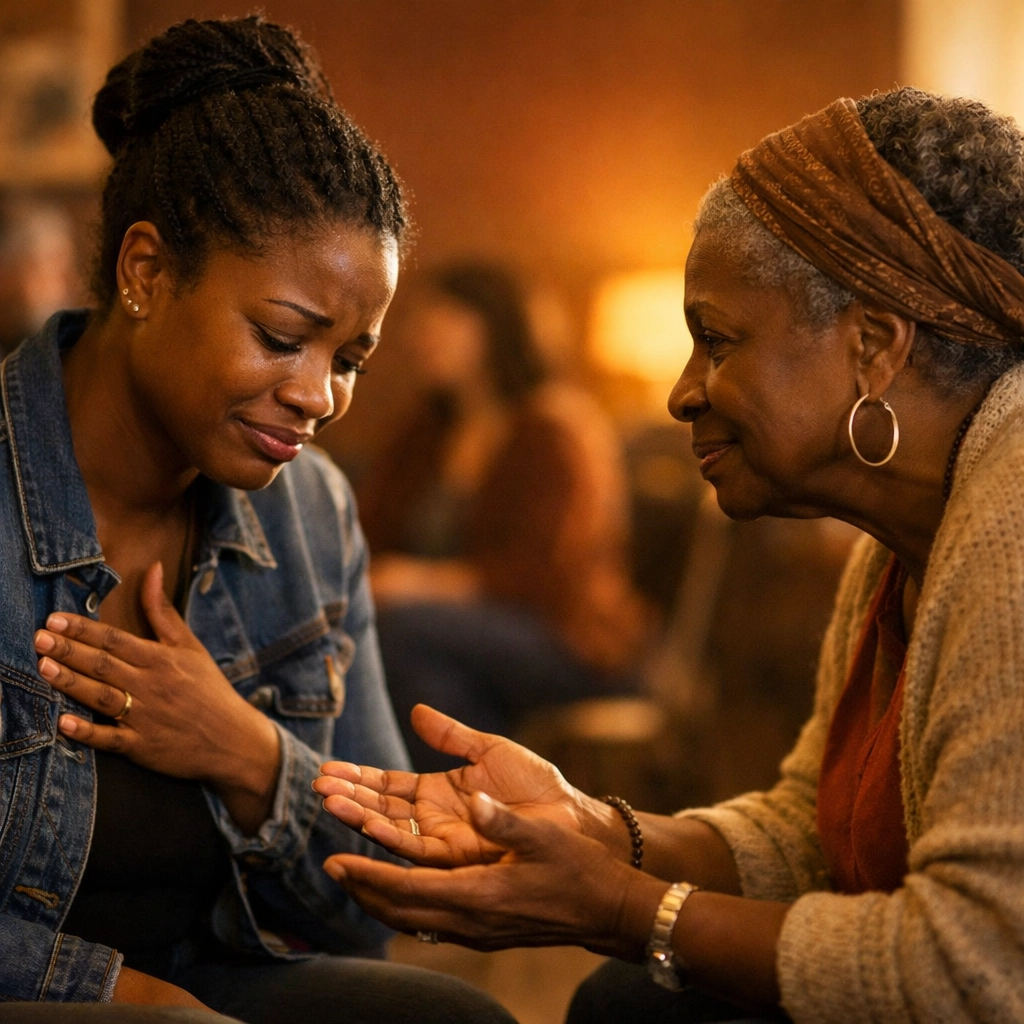
When we work with women impacted by the criminal legal system, we encounter what we call carceral grief, the grief that comes from living in a cage, from losing time, from losing milestones, from losing the ability to mother your children, from losing your name and becoming a number.
But carceral grief doesn't start at arrest. It starts long before.
It starts with:
- Ancestral grief: the inherited trauma of generations who survived slavery, displacement, and state violence
- Disenfranchised grief: the losses society refuses to validate, the loss of safety, identity, dignity, trust
- Cumulative loss: the stacking of death after separation after eviction after court date after betrayal, until your nervous system is just waiting for the next blow
And here's what the system does with all that grief:
It punishes it.
A woman cries during her hearing? She's "manipulative."
A woman doesn't cry? She's "remorseless."
A woman advocates for herself? She's "difficult."
A woman stays silent? She's "uncooperative."
There is no way to grieve correctly in a system designed to criminalize pain.
What Has to Change: From Punishment to Witnessing
If we're serious about interrupting the grief-to-prison pipeline, we have to fundamentally shift how we respond to trauma.
That means:
1. Training every adult in the system to recognize grief-related behaviors
Teachers, police officers, probation officers, judges, case workers, every single person who interacts with at-risk youth and criminalized women needs to understand that "defiance" is often a nervous system protecting itself.
2. Creating trauma-informed alternatives to punishment
Pretrial diversion programs that center grief support. Healing circles instead of court dates. Therapeutic interventions instead of probation violations. Community accountability instead of cages.
3. Ending zero-tolerance policies that criminalize trauma responses
We cannot keep suspending, expelling, and arresting our way to safety. Punishment does not heal. It only deepens the wound.
4. Resourcing the caregivers
Children and women cannot regulate in environments that are chaotic, under-resourced, and surveilled. If we want to stop the pipeline, we have to support the mothers, grandmothers, and aunties who are themselves drowning in grief.
5. Naming grief as a public health crisis, not a personal failure
The losses that fuel the pipeline are not individual "bad choices." They are the predictable outcomes of systemic neglect, structural violence, and generational trauma. Healing must be treated as infrastructure, not an afterthought.

Our Mission: Healing as Disruption, Grief Work as Abolition
At Ayana Thomas Initiative LLC, we believe that healing is not a side project of justice, it is the foundation.
We work specifically with women impacted by the criminal legal system because we know their grief has been misread, minimized, and weaponized. We know that grief doesn't always look like sadness, and we know how to witness what the system refuses to see.
Our work is rooted in the belief that when we stop criminalizing grief and start resourcing healing, we interrupt the pipeline at its root.
Through individual grief counseling, organizational workshops, and our specialized Grief Behind the Gavel program, we create space for women to:
- Name the losses no one validated
- Process the grief the system called "bad behavior"
- Reclaim their identity beyond the labels imposed on them
- Grieve back to life with dignity, support, and community
Because here's what we know for certain:
You are not broken. You are grieving.
And grief, when witnessed and supported, does not lead to a cell.
It leads to clarity. To healing. To freedom.

The Question That Changes Everything
So we leave you with this:
The next time you encounter a woman who seems "resistant," a teenager who seems "defiant," a child who seems "out of control",
Ask a different question.
Not: What's wrong with you?
But: What happened to you? What did you lose? And who has witnessed your grief?
That question: that shift from punishment to presence: is how we dismantle the pipeline.
One witness at a time.
One grieving woman at a time.
One generation at a time.
Because the opposite of criminalization isn't leniency. It's love. It's care. It's seeing someone's pain and choosing to hold it instead of judge it.
And that is the work we are committed to: today, tomorrow, and for as long as the system keeps misreading grief as defiance.
About the author
Ayana Thomas, Grief Practitioner AKA The Grief Coach, brings over 20 years of experience at the intersection of human services, grief support, and justice-impacted systems. As the founder of Grieving Back to Life, Ayana’s work centers grief beyond death, addressing loss tied to trauma, incarceration, identity, and life disruption through trauma-informed, dignity-centered care.
Her approach combines lived experience and professional practice, creating spaces where grief is witnessed, not fixed, and healing unfolds at a human pace.
Gentle next step
If you’re considering reaching out, you’re welcome to contact us when you’re ready