Education
March 6, 2026
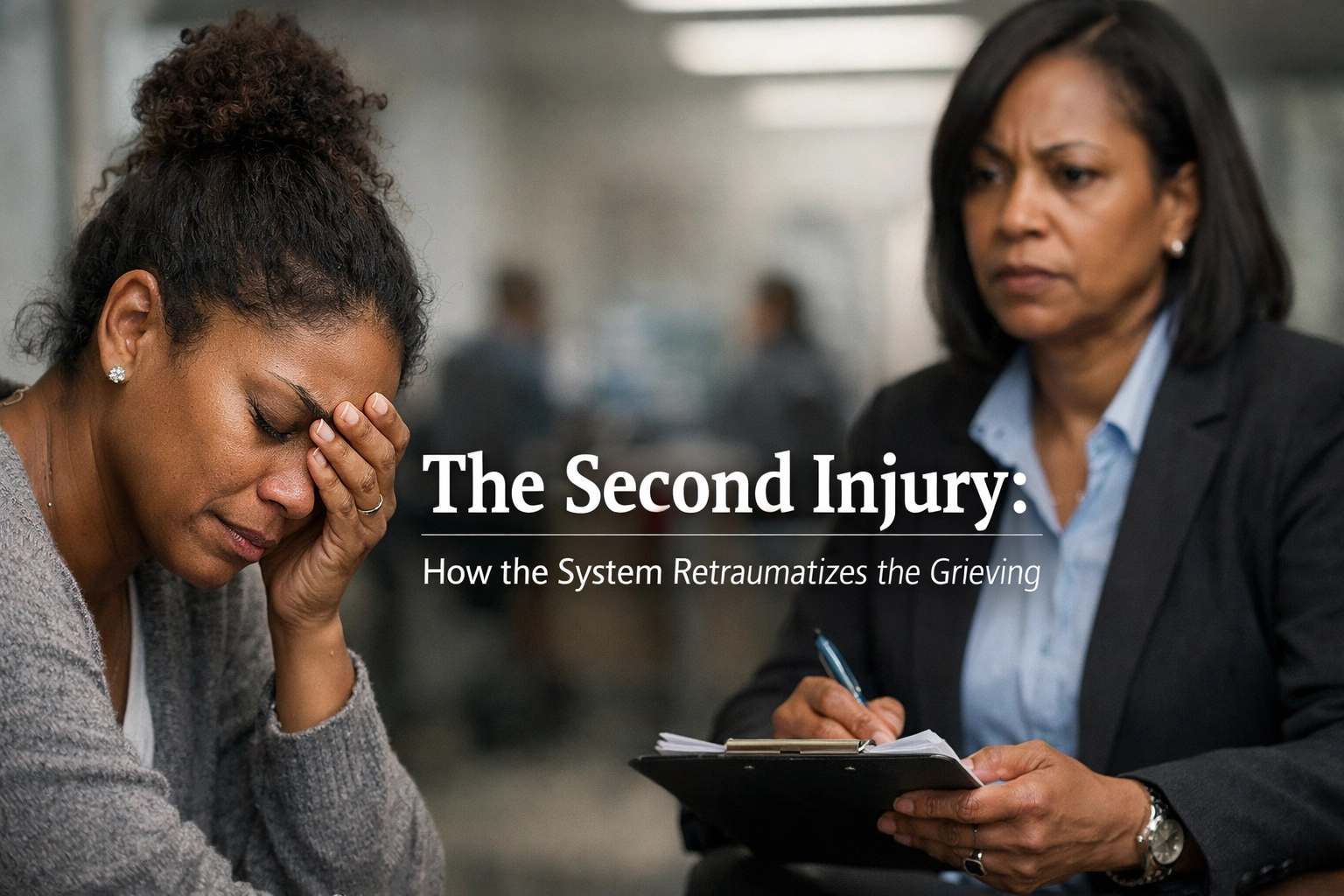
The Second Injury: How the System Retraumatizes the Grieving
When we talk about grief, most people think of a funeral, a bouquet of flowers etc...
We serve women navigating the complex intersection of grief and the criminal legal system.
When we talk about grief, most people think of a funeral, a bouquet of flowers, and a few weeks of "bereavement leave." But for those caught in the web of the criminal legal system, grief doesn't look like a Hallmark card. It looks like a cage. It looks like a courtroom. It looks like a probation meeting where you aren't allowed to cry because "emotional instability" is a red flag.
At the Ayana Thomas Initiative LLC, we recognize a phenomenon that the world often ignores: The Second Injury. The first injury is the loss itself: the death of a loved one, the loss of a child to the foster system, or the shattering of a dream. The Second Injury is the trauma inflicted by the system: incarceration, probation, and parole: on top of that existing pain. It is the system's refusal to let you be human while you are hurting.
What is Disenfranchised Grief?
In our work, we often talk about disenfranchised grief. This is the grief that society tells you that you don't have a right to feel. It is a profound void in the heart that the world refuses to acknowledge.
When a woman is incarcerated, she isn't just losing her freedom; she is grieving the loss of her role as a mother. She is grieving the loss of her identity. She is grieving the milestones she is missing: the first steps, the graduations, the birthdays. Because these losses are tied to "the system," society often treats them as deserved punishments rather than deep, soul-crushing wounds.
We believe that ALL women deserve the right to mourn. Whether you are behind bars or navigating the strict requirements of parole, your resilience after loss is built on the foundation of acknowledging that your pain is real.
, and a few weeks of "bereavement leave." But for those caught in the web of the criminal legal system, grief doesn't look like a Hallmark card. It looks like a cage. It looks like a courtroom. It looks like a probation meeting where you aren't allowed to cry because "emotional instability" is a red flag.
At the Ayana Thomas Initiative LLC, we recognize a phenomenon that the world often ignores: The Second Injury. The first injury is the loss itself: the death of a loved one, the loss of a child to the foster system, or the shattering of a dream. The Second Injury is the trauma inflicted by the system: incarceration, probation, and parole: on top of that existing pain. It is the system's refusal to let you be human while you are hurting.
What is Disenfranchised Grief?
In our work, we often talk about disenfranchised grief. This is the grief that society tells you that you don't have a right to feel. It is a profound void in the heart that the world refuses to acknowledge.
When a woman is incarcerated, she isn't just losing her freedom; she is grieving the loss of her role as a mother. She is grieving the loss of her identity. She is grieving the milestones she is missing: the first steps, the graduations, the birthdays. Because these losses are tied to "the system," society often treats them as deserved punishments rather than deep, soul-crushing wounds.
We believe that ALL women deserve the right to mourn. Whether you are behind bars or navigating the strict requirements of parole, your resilience after loss is built on the foundation of acknowledging that your pain is real.

Did you know?
- Did you know that there are currently over 1.2 million women under the supervision of the criminal legal system in the United States?
- Did you know that the majority of these women are primary caregivers, meaning their "second injury" includes the trauma of family separation?
- Did you know that grief is often misdiagnosed as "non-compliance" or "aggression" in correctional settings?
The Systemic Grind: When Healing Feels Illegal
The criminal legal system is built on rigidity, timelines, and "accountability." Grief, however, is fluid, messy, and follows no schedule. This creates a collision course where the system actively works against trauma recovery for incarcerated women.
Imagine trying to process the death of a parent while living in a space where vulnerability is a liability. Imagine having to report to a parole officer and being told that your "lack of focus": a classic symptom of a storm of grief: is a violation of your terms.
- We see the loss of agency.
- We see the loss of safety.
- We see the loss of dignity.
The system often demands that you "get over it" to prove you are "rehabilitated." But we know the truth: you cannot rehabilitate a broken heart with a set of rules. You heal it with compassion. You can learn more about how we reframe these challenges in our post on The Grief to Prison Pipeline.
Our Mission: Reclaiming the Narrative
Our Mission is to transform the way the world views grief within justice-impacted communities. We aren't here to "fix" you, because you aren't broken: you are wounded. There is a massive difference.
We see your grief after incarceration not as a weakness, but as a testament to your humanity. When the system tries to strip away your identity, reclaiming your right to grieve is an act of revolution. It is a way to say, "I am still here, and my love still matters."

or many, the transition back into society is where the Second Injury hits the hardest. We call this The Reentry Gap, where the pressure to "hit the ground running" ignores the fact that you are still carrying a heavy backpack of unprocessed trauma.
Why Healing Has No Timeline
The system loves a deadline. Probation ends on a certain date. Sentences have a release point. But grief? Grief is the curriculum, and we are all just students of it.
Society expects you to have a "right" way to heal. They want you to move through the "five stages" and come out the other side "productive." We challenge that. We believe that healing unfolds at a human pace, not a judicial one.
In our Grief Behind the Gavel program, we provide a space where your tears become the constant dialogue between your past and your future. We offer a place where you don't have to perform "wellness" to be accepted.
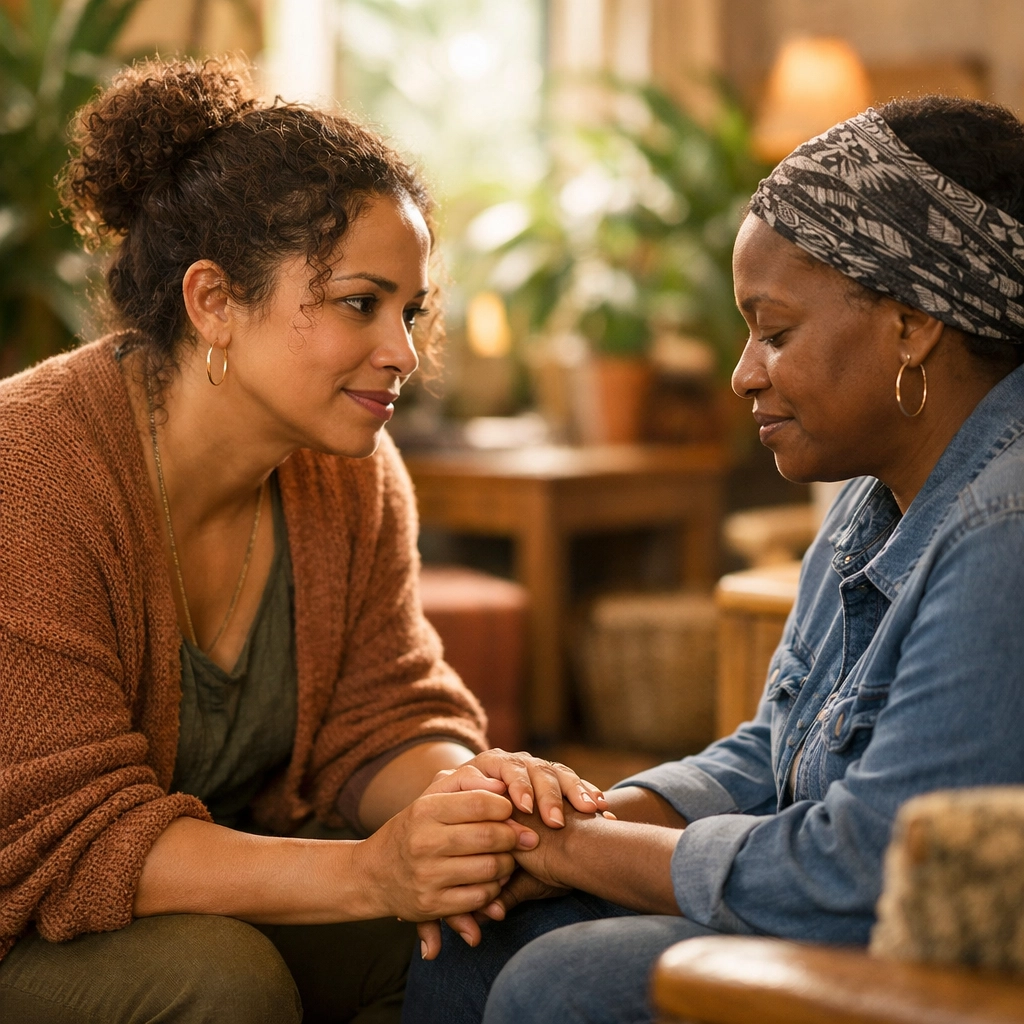
Resilience After Loss: Building Your Own Blueprint
If you are currently feeling the weight of the system pressing down on your chest, know this: your joy is allowed. Your anger is valid. Your confusion is a natural response to an unnatural environment.
To navigate this uncharted territory, you need more than just "coping skills." You need a community that understands the specific barriers you face.
- You need spaces that center your dignity.
- You need advocates who recognize your "defiance" as "distress."
- You need the freedom to be "not okay."
We are here to guide you through the storm. Whether you are seeking individual grief counseling or looking for a way to bring these conversations into your community through organizational workshops, we are standing with you.
A Vision for a More Compassionate Future
We imagine a world where the legal system acknowledges the humanity of those it touches. We envision a future where "trauma-informed" isn't just a buzzword, but a standard of care that prevents the Second Injury from ever happening.
Until then, we will continue to be the bridge. We will continue to shout that your healing is a legacy. By breaking the cycle of suppressed grief, you are creating a new blueprint for the generations that follow you. You are showing them that even in the darkest corners of the system, light can still break through.

Grief is hard, finding help doesn't have to be!
"The soul heals by being with children." : Fyodor Dostoevsky (And sometimes, the soul heals by reclaiming the right to be a mother to those children, even when the system said you couldn't.)
You are not your record. You are not your mistakes. You are a human being navigating a profound void, and you deserve to be seen. If you are ready to stop carrying the Second Injury alone, we are here to hold space for you.
About the author
Ayana Thomas, Grief Practitioner AKA The Grief Coach, brings over 20 years of experience at the intersection of human services, grief support, and justice-impacted systems. As the founder of Grieving Back to Life, Ayana’s work centers grief beyond death, addressing loss tied to trauma, incarceration, identity, and life disruption through trauma-informed, dignity-centered care.
Her approach combines lived experience and professional practice, creating spaces where grief is witnessed, not fixed, and healing unfolds at a human pace.
Gentle next step
If you’re considering reaching out, you’re welcome to contact us when you’re ready